Hail Damage Repair in Clearwater
Clearwater is a small railroad-era city southwest of Wichita on the Chikaskia River, with a historic downtown and a mix of older homes and new subdivisions drawing commuters to the metro.

Hail damage repair in Wichita - per-slope hail mapping, split and bruised shingle work, and honest scopes drawn from the damage the storm actually did.
Wind is the second force, and it never fully leaves. Kansas wind works at shingles, ridge caps, flashing and siding edges day after day, and storm outflows arrive with gusts that find every lifted tab and tired seal. A roof's fastening - how it was nailed and sealed when it went on - is its real wind rating, whatever the paperwork says.
The housing stock matches the weather: asphalt shingles on most of the city, from postwar neighborhoods near the rivers to the newer suburbs, metal on rural lots and outbuildings, low-slope and flat systems on mid-century homes and the commercial corridors. Each fails in its own Wichita way - hail for the shingles, fasteners for the metal, drainage for the flat roofs - and the pages here are organized around exactly that.
Fresh granule surges after hail mean the stones knocked the protective surface loose across the slopes above.
Hail writes its size on the soft metals first - dented vent caps and flashing are the storm's ruler, readable before anyone climbs.
Bruised spots where stones struck show as granule-free patches scattered without pattern - distinct from wear, which follows the sun.
A bruised mat compresses under finger pressure where the stone fractured it - the tactile test inspectors use slope by slope.
Splits through the mat are hail's open wounds: water enters at once, and these are the individual repairs that cannot wait.
Hail falls in swaths. If the roofs around yours are being scoped after a storm, yours stood in the same weather and deserves the same read.
Sedgwick County's hail record is a matter of climate, not luck: the same plains setup that builds supercells builds the updrafts that grow large hail. Roofs here do not face a question of if, but of how many hail seasons a given surface has left in it.
The damage mechanics are specific. A stone strikes, fractures the fiberglass mat from below the surface, and knocks granules free. The spot then ages at triple speed - sun cooks the exposed asphalt, freeze-thaw widens the fracture - until it opens. That delay is why hail is argued about: the storm and the leak can be two years apart, with a straight causal line between them.
Age at the time of the storm decides everything. The same hail that bruises a new architectural shingle cosmetically can end a fifteen-year-old roof outright, because the older mat has no flex left to absorb the blow. Hail repair scopes here are always written per roof, never per storm.
Wichita winters swing: bright mild weeks, then an ice storm or a hard cold snap. Water that works into a crack or under a lifted shingle by day can freeze and widen it by night, snow loads sit on low-slope roofs until a thaw, and ice dams form at the eaves of poorly insulated homes. Winter is inspection and planning season here - the roofs read in winter get fixed in spring, ahead of the storms.
Fall is the repair window. The severe season is past, the weather turns calm and cooler, and there is time to fix what the storms found, replace what the hail retired, and get a roof ready for winter ice. It is also when honest assessments happen, because a dry, cool roof shows its true condition to an inspector.
Spring is storm season in Wichita, and it is roof season too. From March into June, supercell thunderstorms roll off the plains with hail, driving rain and damaging wind, and the roofs that get inspected before the season are the ones that come through it quietly. A spring inspection - fasteners, sealant, edges, drainage - is the single most valuable appointment on the Wichita roof calendar.
Hail damage has a physics that explains its arguments. The stone's energy goes into the shingle mat, fracturing the fiberglass from within while the surface can look nearly unmarked. Granules loosen over the following weeks and months, the fracture weathers open, and the spot ages years in a season. Every hail disagreement - between neighbors, between roofers, between owners and insurers - is at bottom a disagreement about that hidden middle step.
The test square is the discipline that cuts through it. A standard marked area per slope, every hit checked by hand for mat fracture, converts opinion into density: this many functional hits per square, on these slopes, at this roof age. Scopes built on that arithmetic - repair, slope, or roof - are the ones that hold up in every later conversation, because they can be re-measured by anyone.
Choose hail help on the arithmetic: test squares, hit counts, the split-versus-bruise distinction explained with photographs. The roofer who will tell an insurer 'this slope is cosmetic' as readily as 'this one is fractured' is the one whose fractured-slope findings carry weight when it matters.
Wichita sits on the central Kansas plains where the Arkansas and Little Arkansas rivers meet, and plains weather writes the roof calendar here: spring severe storms with hail and straight-line wind, summers hot enough to soften shingle asphalt, and winters that swing from mild days to ice storms. A roof in Wichita is not tested by one climate - it is tested by all of them, in turns, every year.
Hail is the signature threat. Sedgwick County sits in the part of the country where hailstones reach golf-ball size and larger with some regularity, and a single storm can decide the fate of every shingle roof in its path. Bruised, cracked and granule-stripped shingles may not leak the week after a storm - they fail across the following seasons, which is why hail here is an inspection question before it is a repair question.
Vent caps, flashing and gutters record the storm's stone size and direction before the inspector ever touches a shingle.
Standard test areas on each slope are checked by hand and eye, and hits are counted and marked - the scope is built from these counts.
Split shingles are open damage and get repaired or counted toward slope replacement; bruises are graded by depth and the mat's remaining life.
The repair plan follows the per-slope evidence: individual repairs, a slope replacement, or a full roof - with the photographs that justify each line.
Hail outcomes are decided partly by preparation done months earlier. The habits below make a roof faster to document, simpler to scope, and easier to put right when the stones have done their work.
The communities around Wichita share its hail tracks and its storms - with their own twists of storm history, acreage and open-country wind.
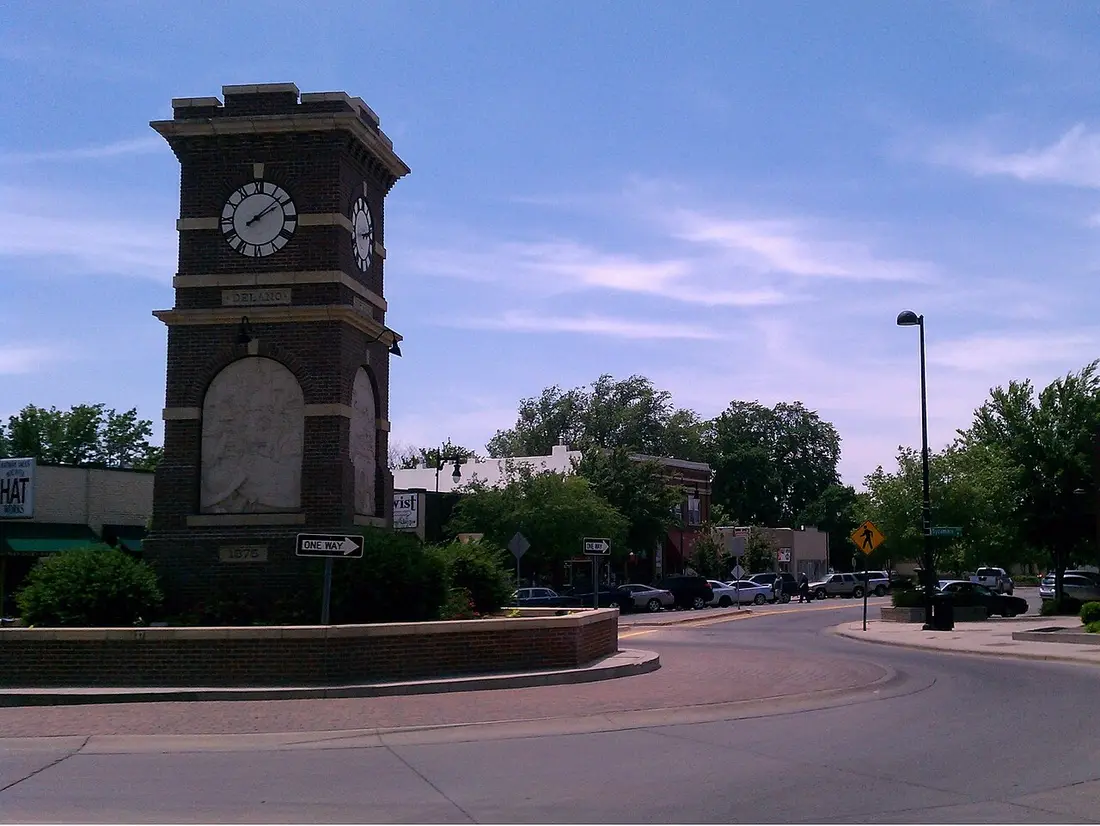
Clearwater is a small railroad-era city southwest of Wichita on the Chikaskia River, with a historic downtown and a mix of older homes and new subdivisions drawing commuters to the metro.
Mulvane is an old railroad town south of Wichita on the Arkansas River, with a preserved Main Street and depot, newer growth near the Kansas Star Casino, and a strong small-city identity.
Rose Hill is a growing Butler County town southeast of Wichita, where newer subdivisions and acreage homes have spread around its schools. It draws families who want country space within commuting range.
Bel Aire is a growing city on Wichita's north edge, built around lakes, parks and newer subdivisions along the K-254 corridor. It has grown from a small community into one of the metro's active family suburbs.
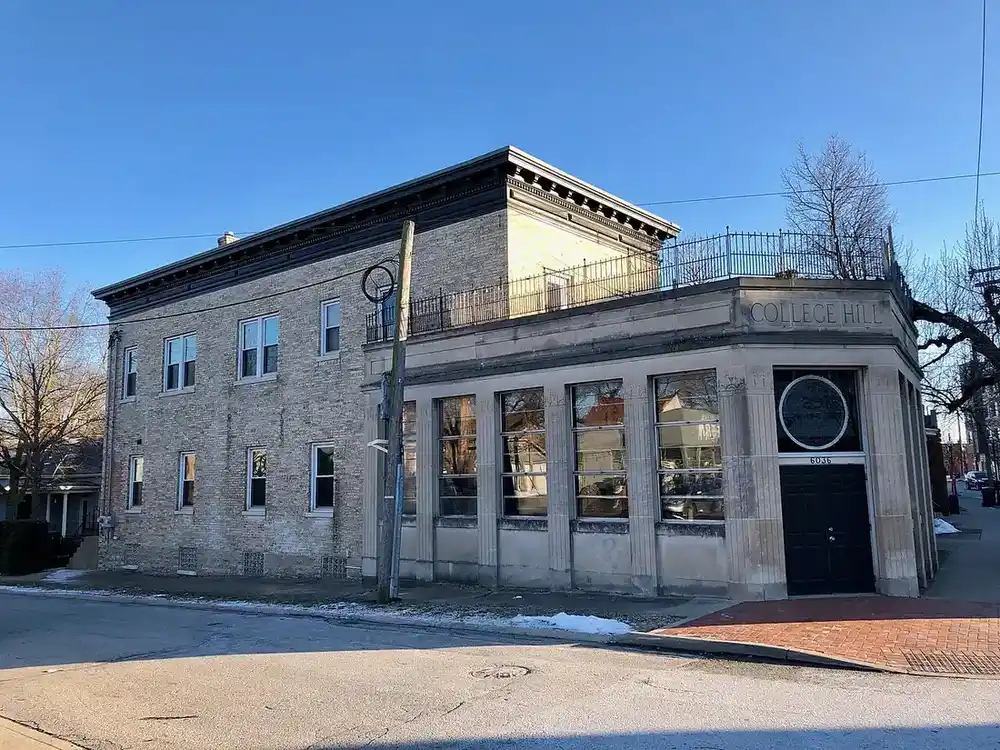
In the historic core and the east side - Riverside, College Hill, Eastborough, Downtown Wichita, Old Town and Delano, Midtown, South Wichita, Planeview, Oaklawn - the housing runs from Wichita's oldest homes to postwar subdivisions, and hail damage repair follows the storm record: hail-read shingles on the older streets, steep complex roofs on the historic homes, and wind exposure that grows toward the open edges.
Across the east and west growth sides and the north side - East Wichita, Northeast Wichita, Uptown Wichita, West Wichita, Southwest Wichita, Auburn Hills and North Wichita, Benjamin Hills, Northwest Wichita, Derby, Andover, Haysville - sit the subdivision waves of the 1970s onward, the growth-edge neighborhoods and some of the county's busiest hail tracks, which together make this the steadiest hail damage repair territory in the city.
Beyond the city line, the same work runs in Clearwater, Mulvane, Rose Hill, Bel Aire, Park City, Valley Center, Kechi, Maize, Goddard, Newton, Hutchinson - railroad towns, fast-growing suburbs and county-seat communities where acreage, metal roofs and open-country exposure add their own chapters. Every one of these area pages carries the local detail for hail damage repair in that community.
Every area we serve has its own Hail Damage Repair page with local detail.
Hail Damage Repair runs across the whole service map: Riverside, College Hill and Eastborough; Downtown, Old Town, Delano and Midtown; East Wichita, the northeast growth edge and Uptown; South Wichita, Planeview and Oaklawn; the west side, Southwest Wichita and Auburn Hills; North Wichita, Benjamin Hills and Northwest Wichita; and beyond the city in Derby, Andover, Haysville, Clearwater, Mulvane, Rose Hill, Bel Aire, Park City, Valley Center, Kechi, Maize, Goddard, Newton and Hutchinson. One call covers all of it - the local pages above carry the detail for each. If your street is not named here, call anyway: routes grow with demand, and most Sedgwick County addresses are already within reach of a scheduled run.
Hail fractures shingle mats from within, often invisibly - the roof can look whole from the street while its surface has been spent stone by stone. Read the storm properly: soft metals for stone size, test squares per slope for functional hits, splits separated from bruises, and everything photographed early.
Read the GuideNew-roof cost is not a number a directory can honestly print - it is the sum of your specific roof's size, pitch, layers, deck state and material choice. Understand the factors, insist on a measured inspection behind any quote, and compare scopes line by line - the differences between quotes live in the invisible lines.
Read the GuideStorm season does not damage sound roofs - it finds the damage the calm months already did, and delivers hail, wind and driven rain to every weak point at once. Prepare in early spring: test the seals, refasten what lifts, renew split sealant, clear every water path, and take the limbs over the roof down while the weather is calm.
Read the GuideStones around an inch and larger can fracture shingle mats, with damage rising steeply with size and wind. Older, hotter or more brittle roofs are hurt by smaller stones - the roof's condition is half the equation.
A marked area, conventionally ten feet by ten feet, on each slope, where every hail hit is counted and checked for mat fracture. Hit density per test square is how repair-versus-replace decisions are made and defended.
They resist it far better: shingles tested to the UL 2218 Class 4 standard are built to survive steel-ball impacts simulating large hail without fracturing. They are not invulnerable to the largest stones, but in this county they change the odds on every storm.
How many slopes were functionally hit, the roof's age and layer count, and whether the scope is spot repairs, slope replacement or a full system. The map comes first; any number quoted before the map exists is speculation.
From the ground you can read the signs - granule surges, dented soft metals, scattered dark spots. The verdict itself comes from the roof: an inspector feeling the mat for fractures, slope by slope. Ground signs say the storm was real; the hand test says what it did.
No. Light hail on a young roof can be cosmetic or repairable in spots; heavy hail on an older roof can retire every slope. The finding follows the mat's condition and the hit pattern - which is exactly what the inspection measures.
Within days to a few weeks. Fresh marks are legible, split shingles are open to the next rain, and documentation made early carries weight later. Waiting a season does not make the damage vanish - it makes it harder to date and easier to argue with.
Yes, when the damage is honestly uneven - hail swaths often spare a sheltered slope. A sound north slope can serve on while the struck slopes are replaced. The per-slope map is what makes that a plan instead of a shortcut.
One call connects you with a roofing professional serving Wichita and the surrounding communities - inspection, repair, replacement and upkeep.
📞 Call Now