Impact-Resistant Shingles: A Kansas Guide
Impact-resistant shingles are tested to survive simulated large hail without fracturing - the damage class that retires ordinary roofs in this county.
Read the Guide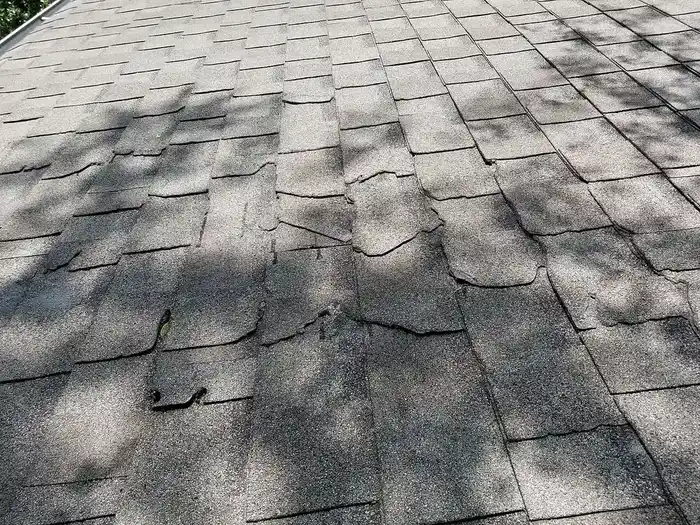
After a storm, the damage map must be drawn while it is legible - granule patterns wash, creases settle, debris gets cleared, and every later decision prices itself from the record.
Problem: After a storm, the damage map must be drawn while it is legible - granule patterns wash, creases settle, debris gets cleared, and every later decision prices itself from the record.
Solution: Document in order: safety first, then dated photographs of debris, yard, soft metals and interior, then a professional per-slope inspection, all filed under the storm's date.
When to call: Call for covering the same day if the roof is open; call for the inspection within days while the evidence is fresh, even if nothing is leaking yet.
The week after a big Sedgwick County storm, two homeowners with identical damage can end up with opposite outcomes - and the difference is rarely the damage. It is the documentation. One has dated photographs, a per-slope report and a clean file; the other has a memory and a cleared yard. This guide is the first homeowner's playbook: what to capture, in what order, and why each piece earns its place.
Hail is the signature threat. Sedgwick County sits in the part of the country where hailstones reach golf-ball size and larger with some regularity, and a single storm can decide the fate of every shingle roof in its path. Bruised, cracked and granule-stripped shingles may not leak the week after a storm - they fail across the following seasons, which is why hail here is an inspection question before it is a repair question.
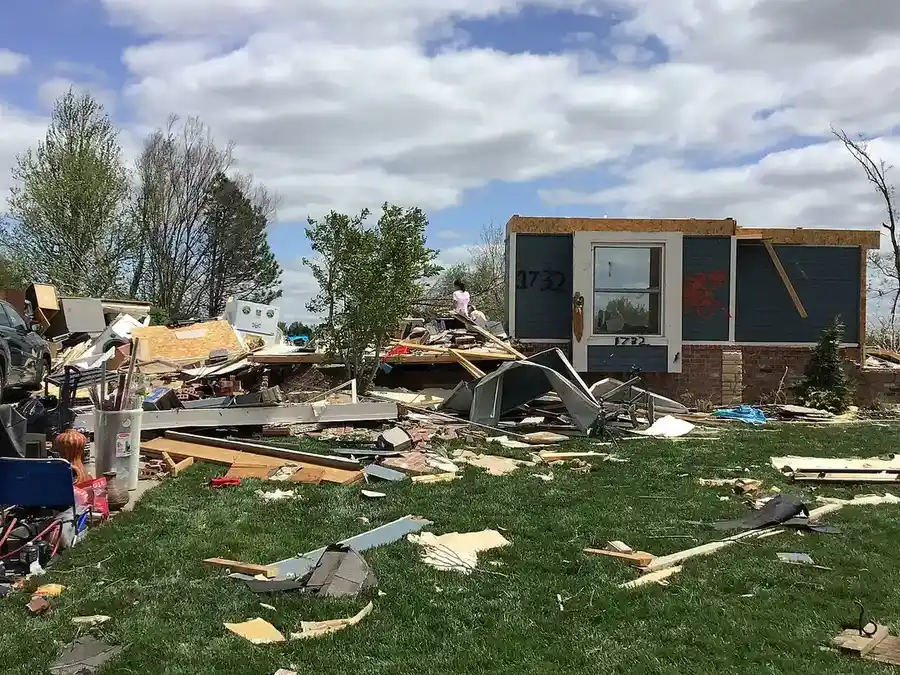
Safety outranks evidence: stay out of rooms under sagging ceilings, treat downed lines and storm-split trees as the hazards they are, and keep off the roof entirely - everything in this guide is photographed from the ground or left to the inspector's ladder. If the roof is open, covering comes first; photograph the damage as the covering crew arrives, before tarps hide it, not instead of the tarp.
Then work the ground evidence while it exists: shingles and debris in the yard (photographed where they lie), dented vents and flashing visible from below, granule piles at the downspout outlets, and every interior stain or drip with something in frame for scale. Date and time ride along automatically in phone photos - that metadata is part of the evidence, so do not strip it by re-saving images through apps that remove it.
A real storm file contains a per-slope inspection report: test-square hail counts where hail is claimed, crease and lift findings where wind is claimed, photographs keyed to each finding, and the inspector's separation of storm damage from pre-existing wear. That separation is not a weakness in your file - it is its credibility. Documents that claim everything convince no one, including the people deciding claims.
File the storm itself alongside: the date, the approximate time, and weather-service or news records of the event's path and hail sizes. Together, the event record and the roof record make the causal chain that every later step - claim, scope, repair, resale disclosure - will walk along. Keep the folder, physical or digital, for the life of the roof.
With an insurer, the file converts an argument into a review: dates align, damage patterns match the recorded storm, and the scope under discussion is the measured one. Without it, the same conversation runs on impressions, and impressions favor whoever shows up with documentation - which may not be you.
The file also governs the repair itself and everything after: it scopes the work to the damage rather than the salesmanship, it becomes the baseline the next storm is measured against, and it answers the buyer's question years later - 'was this roof storm-damaged?' - with records instead of recollection. In hail country, a documented roof is simply worth more than an undocumented one, because its history is known.
Both audiences read the same file with the same questions: was there a storm, did it reach this roof, and does the damage pattern match it? Dated photographs answer the first two cheaply; the inspection's measured findings answer the third. Files that lead with conclusions ('the storm destroyed my roof') and follow with no measurements ask the reader to supply the evidence - readers in claims work do not supply evidence; they weigh it.
The wear-versus-damage separation deserves emphasis because it feels counterintuitive to owners: a report that plainly labels pre-existing wear as wear makes its storm findings more believable, not less. Credibility is the file's currency, and it is earned exactly there.
The expensive mistakes are ordinary helpfulness: the yard cleaned before photographs, the debris hauled, the damaged shingles replaced by a well-meaning relative before any inspection. Each act erases a line of the record. The other classic is the undated, unlocated photo dump - two hundred images with no sequence, no scale and no slope identified, which documents effort rather than damage.
The fix is procedural, not technical: photograph first (wide, then close, with something for scale), keep the phone's date metadata intact, note which slope each set belongs to, and let nothing be repaired or removed ahead of the inspection except what safety and covering demand. That order, followed once, is the whole discipline.
The first hour of a roof emergency has its own order: stop the water, protect the people, document everything, commit to nothing permanent yet. Tarps go on weighted and strapped rather than nailed through sound material; ceilings holding water get relieved before they fall; the camera comes out before the ladder does. Crews that keep that order protect both the house and the homeowner's options.
That is the service side of this guide's subject. When you are ready, the Emergency Roof Repair page carries the process, the coverage by neighborhood and the number to call.
Rooms cleared, hazards noted, damage captured in dated photos before tarps or cleanup.
Debris where it lies, granule piles, soft-metal dents, interior stains - all in frame, all dated.
Test squares, crease counts and keyed photographs while marks are fresh.
Roof report, event record, invoices and photos - one folder, kept for the roof's life.
Photograph debris where it lies before anyone hauls it away.
Keep phone photo metadata intact - do not re-save images through stripping apps.
Label every photo set by slope or room as you take it.
Back the storm folder up off-site the same week you build it.
A documentation-grade inspection delivers per-slope findings with measurements - hail counts per test square, crease and lift tallies, keyed photographs - and a written separation of storm damage from prior wear.
It also dates and ties the findings to the specific event, so the file stands on its own months later when memories have blurred and the yard is clean.
A professional storm inspection builds the file as it works: dated, located photographs before anything is moved; test squares and tallies recorded per slope; storm findings written separately from wear findings; and the whole packet organized under the event's date so an adjuster, a buyer or a second roofer can walk it in order. The professionalism is in the restraint - the file claims exactly what the measurements support.
Cleanup before photography - the yard was evidence.
A photo dump without dates, locations or scale.
Claiming wear as storm damage and spending the file's credibility.
Signing a repair contract before the inspection exists.
In the week after the storm, documentation feels like paperwork. In the month after, it is the difference between a settled scope and an endless argument. Build the file while the evidence is lying in your yard - it is the simplest roofing work you will ever do.
Impact-resistant shingles are tested to survive simulated large hail without fracturing - the damage class that retires ordinary roofs in this county.
Read the GuideHail fractures shingle mats from within, often invisibly - the roof can look whole from the street while its surface has been spent stone by stone.
Read the GuideYes - most hail and crease damage does not leak for seasons, and by the time it does, the evidence tying it to a dated storm has washed away. Documentation is made when the damage is fresh precisely because the consequences arrive later.
Opinions vary, but the evidence order is fixed: inspection first gives you a documented scope to bring to the conversation, rather than opening a claim on a guess. Your own policy's terms and timelines govern the claim itself - check them early so no deadline is missed.
Ask for the inspection first and the paperwork always: a written per-slope report with photographs, a scope drawn from it, and time to read both. Anyone whose process starts with a signature and a promise, rather than a ladder and a report, is selling the storm, not repairing it.
For the life of the roof, and hand it to the next owner when you sell. Hail history is cumulative - each event's file is the baseline the next one is argued from, and a documented roof history is a genuine asset in a sale.
One call connects you with a roofing professional serving Wichita and the surrounding communities - inspection, repair, replacement and upkeep.
📞 Call Now